Decision #490AcceptedTrack · Roadmapping & Prioritization2 min read
Salesforce Is Crowdsourcing Its AI Roadmap From Customers
Salesforce is handing customers a vote on its AI roadmap, betting that enterprise AI prioritization now moves too fast for purely internal planning.
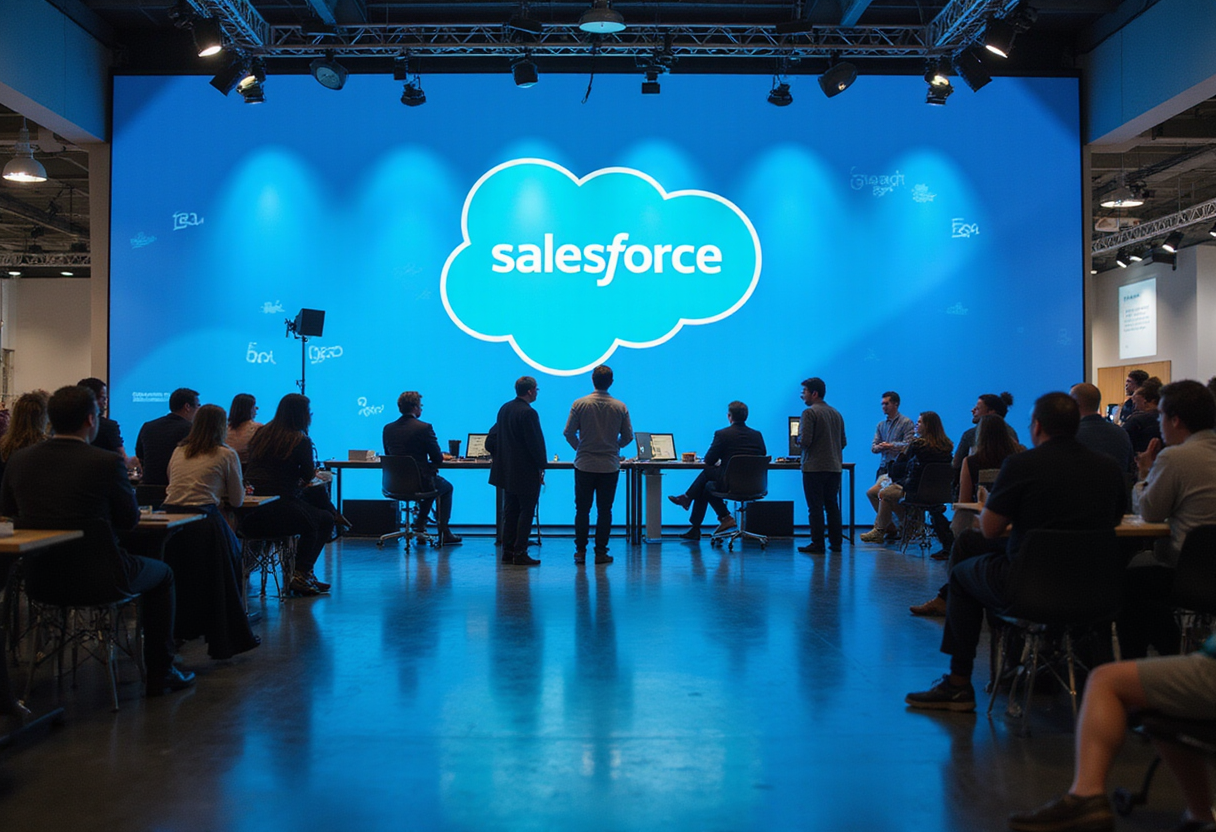
Context
Salesforce is crowdsourcing its AI roadmap directly with customers, TechCrunch reports.
The move shifts AI feature prioritization partly outside Salesforce's internal planning process.
It signals enterprise AI vendors moving toward customer-informed roadmapping as AI cycles outpace quarterly planning.
Salesforce is turning to its own customers to decide what comes next on its AI roadmap, TechCrunch reports — a move that pushes prioritization power partly out of the company's internal planning process and into the hands of the people who run on its platform daily.
For product managers, the story is less about Salesforce specifically and more about what it signals: one of the largest enterprise software vendors in the world is treating AI feature prioritization as something too fast-moving and context-dependent to be settled entirely by internal roadmapping.
What is Salesforce actually doing?
The company is crowdsourcing its AI roadmap — soliciting direction from customers about which AI capabilities it should build, rather than relying solely on internal bets. It is a public commitment to customer-driven prioritization in a category, AI tooling, where most vendors have so far shipped features first and asked for feedback later.
The approach raises the obvious question every practicing PM will ask: how do you aggregate thousands of customer signals into a coherent roadmap without it collapsing into a feature-request queue?
Why does this matter for product teams?
Customer-driven roadmapping works under specific conditions — and fails outside them. It tends to work when:
- Your customer base is broad enough that request patterns reveal genuine market demand, not the preferences of a handful of loud accounts.
- You have a mechanism to weight requests by customer value, not volume.
- The domain is moving so quickly that internal forecasting keeps missing the mark — arguably true for enterprise AI right now.
It fails when requests skew toward incremental asks, when the loudest enterprise customers dominate, or when the team loses the spine to say no. Salesforce, with its enormous and diverse customer base, is better positioned than most to make the aggregation math work — but the failure mode of roadmap-by-committee is real regardless of scale.
The tradeoff is stark: you gain signal relevance and customer buy-in, and you give up some of the coherent product vision that only an internal team can hold. For AI specifically, that tension is acute because customers often can't articulate what they want from capabilities they haven't seen yet.
What does it say about where AI product practice is heading?
Enterprise AI has compressed the feedback cycle to the point where waiting for quarterly planning cycles means shipping behind the market. Salesforce putting customers in the roadmap loop is one version of the broader shift — from shipping AI features on faith to treating deployment as a continuous discovery exercise.
Expect other enterprise vendors to face the same pressure: AI prioritization decisions made purely inside the building are increasingly a competitive liability, and the companies that figure out disciplined crowd-informed roadmapping will set the pattern for how enterprise AI products get built next.
via Google News - Product Roadmap (Source)