Decision #458AcceptedTrack · Product Strategy4 min read
How Octadesk Raised NPS by 25 Points Through Product-Led Growth
Octadesk raised NPS by more than 25 points after restructuring Product, replacing SDRs with a service bot and improving a core feature that cut release support calls by 97%.
Context
NPS rose by more than 25 points by the third month of Octadesk’s Product team restructure.
Release-related support calls fell 97% after a major feature improvement.
The service bot delivered leads about 40% better qualified to sellers after the SDR team was eliminated.
Sales grew about 15% per month while churn stood near 7%, against an internal target of 2%.
Octadesk cites unnamed research that 98% of MQLs never result in product sales.
By Marcus Bennett
Octadesk raised its Net Promoter Score (NPS), its main product-health indicator, by more than 25 points by the third month after restructuring its Product team. Release-related support calls fell 97%, while a service bot delivered leads about 40% better qualified to sellers.
What does product-led growth mean in practice?
Octadesk defines product-led growth (PLG) as a product-led acquisition and retention model. Users should experience the product quickly, without a sales-led handoff. The user remains the main asset.
A product-qualified lead (PQL) uses in-product behavior to show purchase readiness, unlike a marketing-qualified lead (MQL) or sales-qualified lead (SQL). Octadesk cites unnamed research that 98% of MQLs never result in product sales. It therefore treats distribution, easy payment and immediate value as core requirements.
Depending on product use, PLG can lower customer acquisition cost (CAC, the cost of winning a customer) and reach zero CAC, though not automatically. PQL tracking follows signup, sale and upsell using interest, usage and behavioral signals. Octadesk links lower acquisition costs to greater scalability.
What problems forced Octadesk’s shift?
Octadesk’s starting point combined strong growth with poor retention. Sales were rising about 15% per month, while customer churn—the rate at which customers leave—stood near 7%, against an internal target of 2%.
Scalability problems exposed product instability and backlogs. Marketing, Sales, Support and Product teams called too many tasks “urgent,” leaving them overloaded but unfocused. Customer Success and Service felt ignored by Product, so requests often failed to reach implementation. NPS fell sharply, and Octadesk says the transition pushed it further down.
Octadesk wrote: “Don’t expect your new product-led growth strategy to be perfect.” Its response had three parts: track customer count, revenue and churn; test team alignment; and monitor product-health metrics. Sales growth concealed persistent churn, while NPS monitoring exposed broader damage.
How did Octadesk restructure the business?
Octadesk says leaders had to act, prioritize, communicate and execute. The company then made six changes.
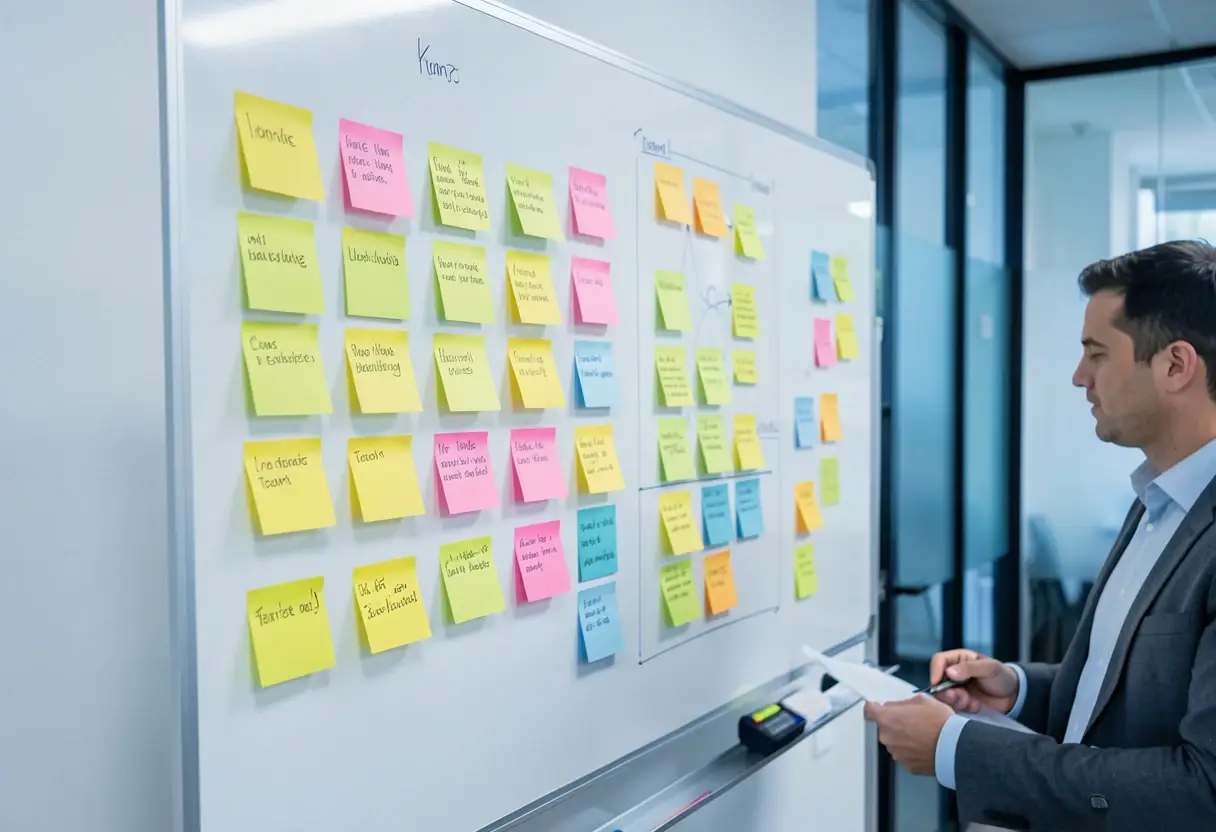
- Minimum viable method. Octadesk changed delivery dates, introduced a basic methodology and shared a kanban board, a visual task board, across teams. It assigned responsibilities and each squad’s area of action.
- Company-wide communication. Leaders explained the strategy and key metrics. Product became responsible for guiding company growth.
- Continuous learning. Teams revisited failures, spoke with customers and fixed the delivery system rather than repackaging its output.
- Product research and development. A dedicated team studies target personas and holds routine user conversations. Its cycle moves from hypotheses through experiments to continuous improvement.
- Scalable Customer Success. The team created a predictable method for extracting customer pain at cancellation or engagement, reducing pressure on staff.
- Service bot instead of SDRs. Octadesk eliminated its Sales Development Representative (SDR) team. Some SDRs moved into Sales and Customer Success; a service bot took the SDR function and delivered leads about 40% better qualified to sellers.
Teams must focus on user pain. Octadesk says these moves are not universal: leaders must adapt them to different PLG problems.
What results followed, and what should product teams copy?
Within weeks, Octadesk improved a major feature to test its effect on the bottom line. It also drafted a launch plan involving the company’s main functions.
Users extracted value from real use-case pain, and the release proceeded smoothly. Release-related support calls fell 97%. By the third month of the new Product structure, NPS had climbed more than 25 points. Octadesk attributes the reversal to identifying failures and implementing immediate, high-impact changes.
These results do not prove that every sales-led company should switch. Octadesk says a company must take the right steps at the right time. Its seven principles make that condition explicit:
- Treat the product as organic. Customer interaction and organizational behavior shape what the product delivers. Change behaviors that no longer support it.
- Face hard decisions. Growth creates sustained discomfort. Resolve product flaws and team conflict through brutally honest conversations.
- Build alliances. Find people who have already “bought in” to PLG. Bring them into the change to shift behavior, attitude and posture.
- Solve complex problems broadly. Do not prioritize only customers with higher Monthly Recurring Revenue (MRR) or louder support demands. Design for the next 10,000 customers and for scale.
- Make entry and exit easy. Use self-service, a simple experience and strong user experience (UX). Reduce the service layer and let Customer Success work more strategically.
- Ship small wins daily. Reward users and improve support in increments that sustain team energy. Do not expect a major achievement in the short term.
- Name teams for their mission. A “Growth” team gets blamed when numbers fall and alone takes credit when they rise. Octadesk renamed its Growth team the Onboarding Team.
What remains unfinished in Octadesk’s PLG model?
Octadesk says PLG is more than a free or trial version. It requires rethinking the customer journey and treating the product as a communication platform.
The company remains a long way from consistently generating PQLs. A new free offer is planned, but the immediate priority is improving the existing trial. Octadesk also offers a free PLG fundamentals course that gives a readiness view in under an hour.
As PLG matures, the practical standard will be whether the product can reveal buying intent, deliver value without friction and reduce dependence on manual selling without hiding churn.
via blog.hubspot.com (Original)
More from Marcus Bennett
Show full bio
Market editor covering regulation, policy and their impact on product management at Roadmap File.
44 articles