Track · AI in Product3 min read
Redwood Materials' CTO: retired EV batteries could power AI data centers
Redwood Materials CTO Colin Campbell says repurposed EV batteries could build a storage business as large as or larger than its recycling core, with Crusoe in Nevada already a customer.
Context
Colin Campbell spent 17 years at Tesla before joining Redwood Materials, founded by JB Straubel in 2017, as CTO.
Campbell says the energy storage business is 'at least as large as the metals business, maybe larger.'
Redwood has deployed a large battery installation for AI infrastructure company Crusoe in Nevada.
Investors include Google and Nvidia, within funding totaling billions of dollars.
Redwood paused its copper foil expansion after economics changed.
A battery pack rolled off Tesla's Model 3 line every 30 seconds, and Colin Campbell kept asking one question: what happens to all of them when the cars wear out? After 17 years at Tesla, Campbell is now CTO of Redwood Materials, the battery recycler founded by Tesla cofounder JB Straubel in 2017, and he is turning that question into a second business that he expects to match — and possibly outgrow — the first.
"It's easily as large as the metals and refining business," Campbell said of Redwood's new energy storage operation, speaking at Business Insider's AI Insider live event series. "At least as large as the metals business, maybe larger."
What is Redwood actually building?
The original business extracts nickel, lithium, and cobalt from spent EV batteries at its Nevada campus. The new one, Redwood Energy, repurposes batteries before they are destroyed.
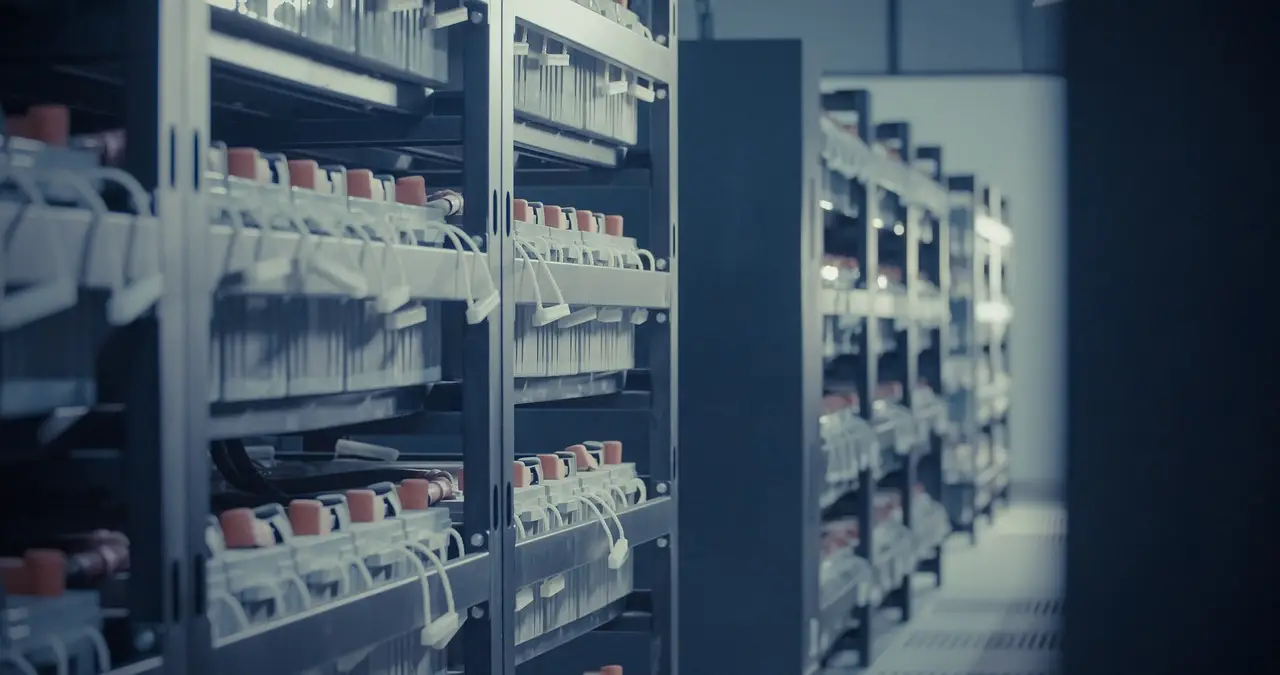
The insight came from engineers on the floor. They watched retired EV packs heading toward recycling equipment and realized many could still hold substantial charge — another five to ten years of useful life. Rather than shredding them, Redwood now assembles them into large stationary storage systems that serve power-hungry facilities.
The first major customer segment is AI. Data centers consume enormous amounts of electricity, and grid interconnection for new sites can take years. Battery storage sidesteps that queue. Redwood has already deployed a large installation for the AI infrastructure company Crusoe in Nevada.
One engineering problem stands out. Different automakers use batteries with different electrical characteristics and software. Redwood's answer is a device called the Pack Manager, which Campbell described as a "universal translator" that lets packs from different manufacturers operate together in a single system. The company is scaling Pack Manager production and developing additional technology to make entire power installations cheaper and faster to build.
Where the risk sits
Campbell said the hardest part is not the underlying technology. It is making the process work economically at enormous scale, which demands huge investments in factories and equipment.
Redwood has already made one painful call. It paused its copper foil manufacturing expansion after the economics changed. "We are not wedded to the original business plan," Campbell said. "It's very dangerous to just plow ahead regardless of the current economics two or three years later."
There is also political risk around AI data centers, which have drawn recent backlash. Campbell is not overly worried. Data centers are important customers, but the storage systems can serve factories and other facilities. Even if the AI boom disappeared, he argued, the business would still have a strong future.
Funding reflects the bet. Redwood has raised billions of dollars, with investment from Google and Nvidia. Campbell said the key is finding patient investors who understand that complicated industrial businesses take years to build — a funding profile most software startups never need to justify.
What product builders can take from it
Asked what Tesla and Redwood taught him about turning hard engineering problems into companies, Campbell's answer was simple: question how things have always been done.
In the data center industry, different companies each own a slice of the electricity supply system. Few have stepped back to ask how the whole chain — from the power line to the AI chip — could work better together.
His advice to founders: identify these overlooked seams, strip away unnecessary complexity, and prove there is a better approach. Convincing an entrenched industry to change is genuinely hard. That difficulty is also where the largest opportunities hide.
"If you see that kernel of efficiency," Campbell said, "we can do this a different way."
The takeaway is plain: Redwood's advantage came not from new chemistry but from noticing value moving down a conveyor toward the shredder. As AI's power appetite keeps outrunning grid capacity, second-life batteries moved from sustainability talking point to revenue line.
via feeds.businessinsider.com (Source)
More from Nathan Brooks
Show full bio
Senior reporter covering companies, deals and strategy in product management at Roadmap File.
56 articles